Data Contracts Are No Longer Optional And Here's Why 2026 Changes Everything
In 2026, I believe that data contracts are not just a best practice for larger data teams, they are becoming a necessity for any company that wants reliable reporting, trustworthy AI systems, and cleaner collaboration between teams. As organisations rely more heavily on data to make decisions, the cost of unexpected changes, broken pipelines, and inconsistent information continues to grow. This is the year the industry catches up to that reality.
What Is a Data Contract?
A data contract is a formal agreement between the team that produces data and the team that consumes it. It defines what data will be delivered, in what format, to what standard of quality, and who is responsible for it.
Think of it like a service agreement, but for data. Both sides know exactly what to expect. If something is going to change, it gets communicated and agreed in advance, and not discovered after the fact when something has already broken.
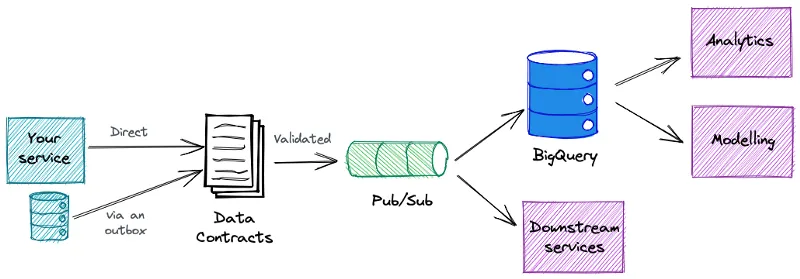
Image by Andrew Jones
In practice, this means teams spend far less time firefighting and far more time actually using data to do useful things.
Before Data Contracts: How We Used to Manage Data
To understand why data contracts matter, it helps to look at what teams were doing before them and why those approaches kept failing as companies grew.
For most of the last decade, sharing data between teams relied on informal agreements, tribal knowledge, and a fair amount of trust. One team would produce and send data down a pipeline, another team would build reports or products on top of it, and the understanding of what that data actually meant lived in someone's head or at best, a document that nobody kept up to date.
When something changed — a column getting renamed, a value going missing, or a business definition quietly shifting — the team depending on that data would find out the hard way. Reports would break. Automated systems would start producing wrong results. Engineers would spend hours tracing the source of a problem that could have been caught immediately if there had simply been a clear, agreed understanding in place from the start.
Various tools existed to help. Some tracked the structure of data. Others helped teams find and discover datasets. Others monitored for issues. But none of them solved the root problem: there was no formal, enforceable agreement between the people producing data and the people depending on it.
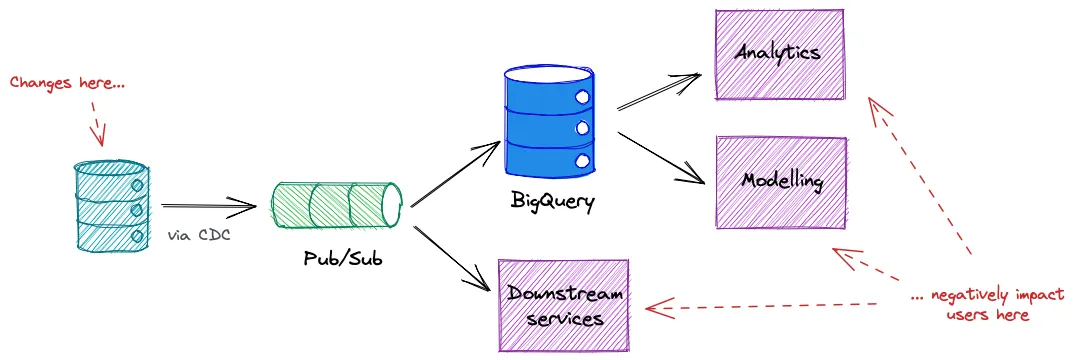
Image by Andrew Jones
That is the gap data contracts were built to close.
Where It All Started: GoCardless and the Origin of Data Contracts
I find it worth pausing on where data contracts came from, because it grounds the concept in a very real problem rather than an abstract idea.
Data contracts as a formalised practice trace back to GoCardless, the London-based payments company, where the concept emerged around 2021 and 2022. Andrew Jones, Principal Engineer at GoCardless, was central to developing and articulating the approach. He has written extensively about how and why GoCardless adopted data contracts, documenting not just the technical side but the organisational challenges that made a more structured approach necessary in the first place. You can read about how GoCardless implemented Data Contracts in much more detail on his medium blog.
What makes this origin story compelling is that data contracts were not designed in a whitepaper or a research lab. They were built to solve a pressing, practical problem inside a fast-growing company, one where unreliable data had direct consequences for financial operations. GoCardless adopted them internally before sharing the concept publicly, which means the approach was proven against real production pressures before it became a wider industry conversation.
That context matters. It tells us that data contracts were not invented for their own sake, they were forged in an environment where broken data genuinely cost the business.
Why Data Contracts Matter More Than Ever in 2026
Three converging forces are driving data contracts from niche practice to mainstream necessity: AI reliability, governance, and regulation.
AI systems are only as good as the data behind them. Whether a company is running automated reporting, building recommendation engines, or using AI to support customer decisions, unreliable data leads to unreliable outcomes. The more a business depends on AI, the more it needs to trust the information feeding into it.
Governance is also becoming more important as organisations grow and data flows across more teams and systems. I believe companies need clearer ownership and accountability over their data, and data contracts provide a practical, lightweight way to establish that without slowing everyone down.
Finally, regulatory pressure is increasing across most industries. Businesses now need to demonstrate where data comes from, who is responsible for it, and whether it can be trusted. Data contracts make that far easier to answer.
That is why I think data contracts sit so powerfully at the intersection of moving fast and staying in control.
How Mainstream Companies Are Adopting Data Contracts
What I find most compelling about data contracts today is how broadly they are being adopted across industries, company sizes, and very different types of business. The idea that started inside one fintech company has found genuine traction far beyond it.
GoCardless remains the most instructive example, precisely because it is where the practice began. Their experience shows that data contracts are not a luxury, they are a practical response to the kind of data reliability challenges that any growing company will eventually face.
PayPal has publicly shared how it has worked to improve data reliability and ownership at scale across its global operations. For a company processing hundreds of millions of transactions, having clear agreements around what data means and who is responsible for it is not just good practice, it is essential to keeping everything working reliably.
Glassdoor, the jobs and workplace review platform, has also moved toward more structured data ownership as its data environment has grown. Ensuring that the data powering its platform (from salary information to company reviews) is consistent and trustworthy is central to the value it delivers to its users.
Pipe, the revenue-based financing platform, has shared how it introduced data contracts in a way that supports day-to-day development rather than treating governance as a large, disruptive project. Their approach is a good model for smaller teams looking to adopt the practice without adding unnecessary processes.
Raiffeisen Bank International illustrates why regulated industries are natural early adopters. In financial services, I believe data contracts are especially valuable because trust, traceability, and consistency are non-negotiable. When compliance is not optional, neither is knowing exactly what your data means and who owns it.
These examples cut across startups, scale-ups, and large enterprises. The same core problems appear regardless of size: unexpected changes, unclear ownership, and failures that cost time and money. Data contracts address all three.
How Startups Can Adopt Data Contracts Early
The best time to introduce data contracts is before things get messy, not after. Here is a straightforward approach for teams starting out:
Start with what matters most. Not every dataset needs a contract on day one. Focus first on the data that powers your revenue, your reporting, your customer experience, or your AI features.
Write down your expectations. A good contract should cover what the data looks like, which fields are required, how fresh it should be, and who owns it. If a business decision depends on the data, that should be documented too.
Check automatically, not manually. A contract is only useful if it is actually enforced. Set up automated checks so that problems are caught early, before they reach the teams depending on the data.
Make ownership clear. Every important dataset should have a named person or team responsible for it. That makes it much faster to resolve issues and approve changes.
Communicate changes before making them. When something needs to change, treat it like a versioned update and tell the people who will be affected. It is a small habit that prevents a large amount of pain.
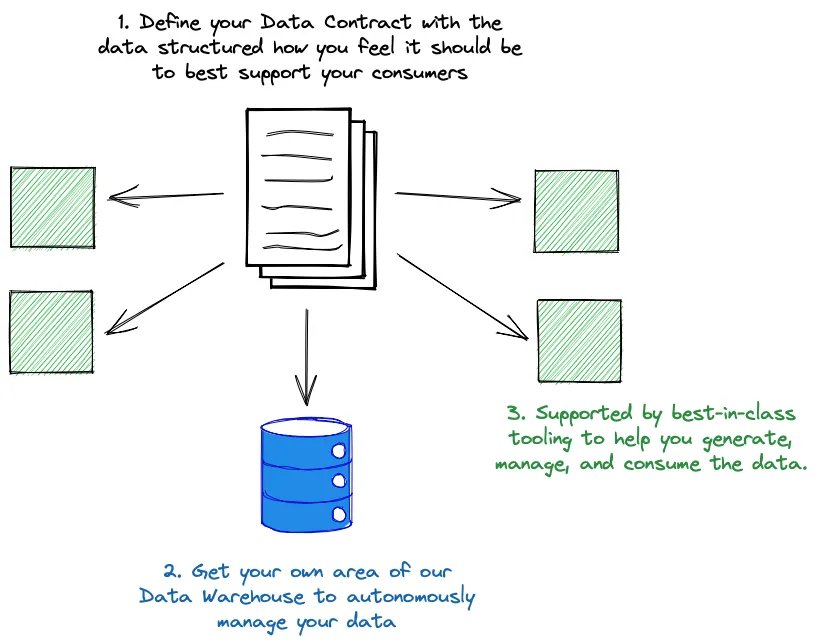
The objective is making it easy for our data generators to make their data available to their consumers.
Image by Andrew Jones
The Business Value of Getting This Right
Data contracts improve more than just data quality. For reporting teams, they reduce the risk of metrics drifting or becoming inconsistent. For AI teams, they improve the reliability of the information feeding into models and automated systems. For engineering teams, they reduce wasted time by making expectations clear before changes are made rather than after.
The broader effect is a healthier working culture around data. Teams spend less time debugging and more time building, improving, and making decisions with confidence.
The Habit Worth Building Now
Data contracts are moving from a niche engineering practice to a standard part of how modern organisations manage data and I believe the shift is happening faster than most teams expect.
As dependence on AI, reporting, and automated decision-making deepens, the need for reliable, well-managed data will only grow. For startups especially, now is the right time to build this habit. The question is not whether your data is important enough to manage properly. If you are using it to make decisions or power products, it already is.
The teams that treat data contracts as a foundation rather than something to sort out later will be in a much stronger position. The only question is whether yours will be one of them?